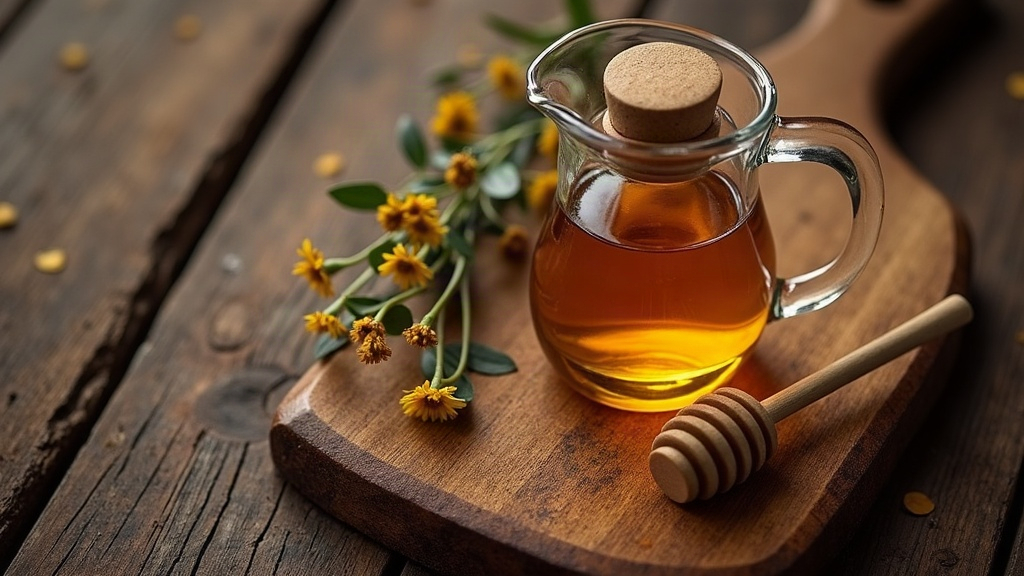
Long before anyone tracked their morning numbers, Biblical drink (oil)/ Honey blend sat on breakfast tables as a matter of habit and taste. This page looks at where that habit came from — and how it fits, or doesn’t, into the way adults think about their first meal of the day. It’s education, not instruction, and it never replaces what your doctor already knows about you.
If you’ve spent any time paying attention to how your body moves through the day, you already recognize this pattern — even if you’ve never put words to it. These four moments show up again and again in the mornings of adults who are simply trying to eat with more intention.
A meal that felt fine going down, followed a couple of hours later by a heaviness or restlessness that seems to come from nowhere. It's a familiar rhythm for a lot of people, and it usually has more to do with the whole plate than any single food on it.
Waking up already behind, reaching for whatever's fastest, and wondering why breakfast never quite sets the tone for the day the way it used to. The rush itself can quietly shape what ends up on the plate.
One source says avoid this, another says it's fine in moderation, a third says it depends. Sorting through it all before 8 a.m. is its own kind of exhausting, and it's no substitute for a conversation with the person who actually knows your health history.
Three times a day, a decision has to be made — and for adults who are paying closer attention to what they eat, that decision can start to feel heavier than it should. Building a few steady habits can take some of that weight off.
A lot of what circulates about carbohydrates, fruit, and so-called “diabetic food” is oversimplified. Here’s a plainer look at three ideas that come up often at the breakfast table.
All carbohydrates behave the same way, so they should all be avoided equally.
Carbohydrates vary widely depending on fiber, pairing, and portion. The composition of the whole plate tends to matter more than treating one ingredient as the villain.
Fruit is too sugary and should be cut out entirely if you’re watching what you eat.
Whole fruit brings fiber and water along with its natural sugars. How it fits into a meal — and how much of it — tends to matter more than avoiding it altogether.
A product labeled “diabetic-friendly” is automatically the smarter choice.
A label on a package doesn’t replace reading the ingredient list or thinking about portion size. Habits built around whole, recognizable food often carry more weight than a claim printed on a box.
None of this is a program or a protocol — it’s a set of small, repeatable habits some adults find useful when they think about how they eat breakfast, lunch, and dinner.
Some people find it helpful to eat vegetables or protein before reaching for the starchier parts of a meal. It’s a small ordering habit, not a rule, and it’s worth mentioning to your doctor if you’re curious how it might fit your own routine.
Eating at a slower pace, setting the fork down between bites, and giving a meal its own time instead of rushing through it are habits that many people notice make the whole experience feel steadier.
A gentle walk after eating — even just a few minutes around the block or up and down the stairs — is a habit some adults build into their day. As with any change to routine, it’s worth mentioning at your next appointment rather than deciding alone.
Long before it had a modern name, the pairing of pressed oil and raw honey shows up again and again in old Mediterranean kitchens — drizzled over warm bread, stirred into simple morning dishes, offered to guests as a gesture of hospitality. Ancient texts and old-world tables treated the combination less as a remedy and more as a staple: something poured at the start of a meal, tied to abundance, to sharing, to the rhythm of a household waking up together. It traveled through generations of home cooks long before anyone thought to study it, passed down the way a family recipe is passed down — by taste, by memory, by the table it was served on.
The story of Biblical drink (oil)/ Honey blend belongs to the kitchen and the table, not to a lab. Understanding where a food tradition comes from is different from deciding what belongs on your own plate — that second part is worth figuring out with the professional who knows your health history.
A steep dip in energy an hour or two after eating is something worth describing to your doctor in detail, rather than trying to interpret it on your own.
Feeling unusually thirsty on an ordinary day, with nothing obvious explaining it, is a detail worth mentioning at your next appointment.
Waking up tired even after a full night's sleep, on a regular basis, is a pattern your doctor may want to know about.
If you find yourself unsure what to eat at almost every meal, that uncertainty is worth raising with the professional who already knows your history, rather than piecing together advice from different sources.
If close relatives have dealt with blood sugar concerns and you haven't brought that up at your own checkups, it's a conversation worth having with your doctor.
Any change in how you feel day to day that you've quietly noticed but not yet discussed is worth bringing to your next visit — your doctor can put it in context far better than a search engine can.
These are individual experiences shared for illustrative purposes only. Names are fictionalized, results vary from person to person, and none of this is a guarantee of any outcome. Always follow the guidance of your own healthcare provider.
There’s more to the history, the habits, and the everyday details behind this page than we could fit above. Take a closer look — and remember, nothing here replaces your doctor’s guidance or any part of your current care plan.
Advertising Disclosure: This page contains sponsored content and affiliate links. We may receive compensation if you click a link or make a purchase through the links provided on this page. This does not increase any cost to you.
Content Disclaimer: This content is for educational purposes only and has not been evaluated by the FDA. It is not intended to diagnose, treat, cure, or prevent any disease, and it does not substitute for professional medical advice, diagnosis, or treatment. Always consult a qualified healthcare professional before changing your diet, routine, or any prescribed treatment.
Results Disclaimer: Individual results vary. Testimonials and examples shared on this page reflect personal experiences and are not a guarantee of any specific outcome for any reader.
© 2026 · All Rights Reserved